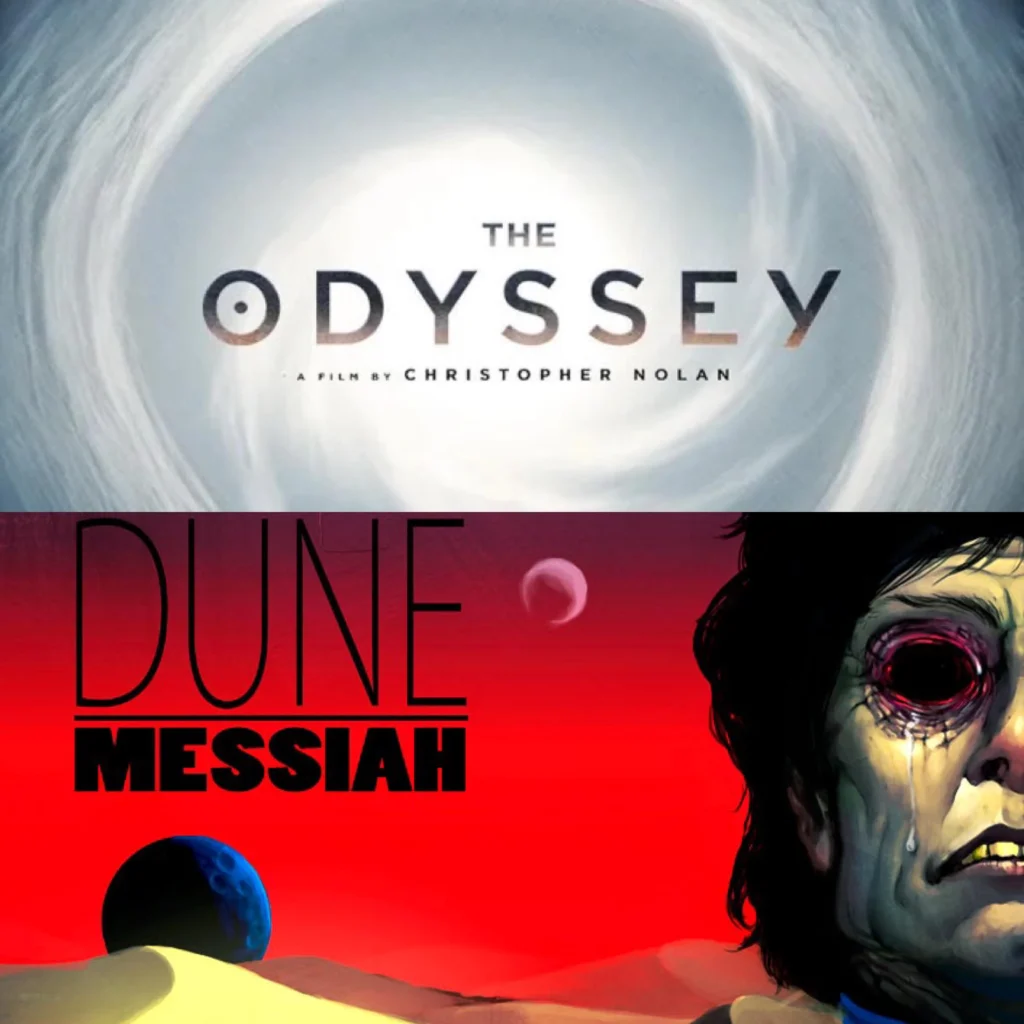

The Sands of Time: Deconstructing the Cinematic Epic in ‘Dune Part Two’ and the Legacy of ‘The Odyssey’
The vast, unforgiving landscapes of Arrakis, governed by destiny and spice, echo the timeless journey of Odysseus. As audiences prepare for the monumental theatrical releases of this year, the conversation in Hollywood is pivoting toward the fundamental architecture of the cinematic epic. By comparing the meticulously crafted scope of ‘Dune Part Two’ with the foundational narrative of Homer’s ‘The Odyssey,’ we can deconstruct how modern filmmakers are evolving the classic epic structure for the big screen.
As of April 26, 2026, industry insiders are noting that this deep dive into cinematic epic storytelling is setting a new benchmark for visual and thematic ambition. It is not merely an adaptation; it is a philosophical exploration of endurance, power, and the cost of ambition.
Table of Contents
- The Odyssey Narrative Framework
- Dune Part Two’s Epic Structure
- The Evolution of Cinematic Adaptation
- Themes: Power, Fate, and Psychological Cost
- Visual Language: From Text to Screen
- The Cinematic Legacy of Epic Literature
The Odyssey Narrative Framework
Homer’s ‘The Odyssey’ is the quintessential journey of the epic—a narrative defined by arduous travel, divine intervention, and the struggle to return home. Its power lies in its focus on the psychological toll of exile and the complex, often morally ambiguous relationships faced by the hero. The narrative arc is one of relentless struggle: Odysseus faces physical perils, divine wrath, and the temptations of temporary comfort. The structure is cyclical, built around the tension between the known world and the unknown, making the journey itself the central theme.
The core of the Odyssey is the tension between external conflict (monsters, storms, rivals) and internal conflict (maintaining identity, loyalty, and sanity). This focus on the internal struggle provides a timeless foundation for any epic, demonstrating that the true epic is not just the journey, but the character’s resilience through it.
Dune Part Two’s Epic Structure
Denis Villeneuve’s ‘Dune Part Two’ takes this ancient framework and transforms it into a hyper-modern, political, and spiritual epic. While adhering to the core themes of destiny and struggle, the structure shifts from a personal quest for homecoming to a massive, socio-political confrontation over galactic dominion. The structure of ‘Dune Part Two’ utilizes the traditional three-act structure but expands it to encompass a sprawling political and ecological war, emphasizing the brutal reality of empire and feudal conflict.
Where ‘The Odyssey’ is a deeply personal narrative focused on survival and memory, ‘Dune Part Two’ is a grand spectacle focused on the systemic forces that dictate fate. The scale is exponentially larger, introducing complex hierarchies of power, religious manipulation, and the unforgiving nature of planetary politics. This shift demonstrates a sophisticated evolution in epic film structure: moving from the personal, mythological journey to the systemic, political epic.
The Evolution of Cinematic Adaptation
The successful transition from literature to the screen, particularly in the realm of epic fiction, highlights a critical evolution in cinematic adaptation. Modern epic filmmaking, exemplified by ‘Dune Part Two,’ does not simply translate the text; it reinterprets the underlying philosophy through a radically expanded visual and thematic lens. The adaptation process now involves not just fidelity to the source material but an exploration of the source material’s core ideas—fate, power dynamics, and the corrupting influence of immense wealth—and translating them into contemporary, visceral cinematic language.
This evolution requires filmmakers to understand that the epic is not confined to physical travel but can encompass the vastness of political systems and ecological consequences. The challenge is balancing the mythic grandeur of the source material with the gritty, character-driven realism that modern audiences demand. The use of advanced production techniques allows these adaptations to achieve an unprecedented level of visual storytelling, transforming abstract concepts into tangible, immersive experiences.
Themes: Power, Fate, and Psychological Cost
Both narratives hinge on the theme of endurance, but they approach the psychological cost of that endurance differently. In ‘The Odyssey,’ the endurance is defined by the hero’s personal will and memory; the cost is the loss of loved ones and the struggle to reclaim a lost identity. The epic is fundamentally about survival against external forces.
Conversely, ‘Dune Part Two’ delves into the cost of political and religious power. The characters face not just physical threats but the insidious corruption of power structures and the moral compromises required to wield absolute authority. The psychological cost in ‘Dune’ is the realization that fate is often a manufactured construct, and that the pursuit of power inevitably leads to tyranny. This shift allows the modern epic to explore darker, more nuanced philosophical questions about the nature of destiny and free will.
Visual Language: From Text to Screen
The visual execution of these epics is where the true evolution of cinematic epic storytelling is most evident. ‘The Odyssey’ relies on evocative, often lyrical descriptions, allowing the reader’s imagination to fill in the vastness of the sea and the land. ‘Dune Part Two,’ however, translates this lyrical quality into a concrete visual language. The cinematography is not just beautiful; it is integral to the narrative. The sweeping, brutal scale of the desert landscapes and the stark, imposing architecture of the Fremen and the Harkonnen worlds serve as metaphors for the characters’ internal and external conflicts.
Filmmakers are now using visual scale to convey thematic weight. The vastness of Arrakis is not just a setting; it is an active character, emphasizing the insignificance of human ambition against the forces of nature and the unforgiving scope of the empire. This mastery of visual storytelling elevates the epic from a historical retelling to a contemporary myth.
The Cinematic Legacy of Epic Literature
The comparison between these works reveals a profound understanding of the epic literature influence in modern cinema. ‘The Odyssey’ established the blueprint: a journey of self-discovery and resilience. ‘Dune Part Two’ demonstrates how that blueprint can be radically updated. The contemporary epic leverages the classic structure as a skeleton, but fills it with modern political complexity, psychological depth, and a staggering visual scope. This evolution proves that the power of an epic lies not in the specific plot points, but in the universal human questions it poses: What is loyalty? What is power? What is the price of survival?
As we look toward future cinematic spectacles, the lesson from this comparison is clear: the future of the cinematic epic lies in blending mythological depth with contemporary political and psychological realism. The goal is to create stories that feel timeless in their scope while remaining intensely relevant in their exploration of the human condition. The journey from ancient text to modern screen is a testament to Hollywood’s ability to adapt foundational myths into enduring, unforgettable experiences.
What’s Next: The Future of Epic Storytelling
The trend we are witnessing is the refinement of the epic form. Future cinematic epics will likely continue to move beyond simple linear journeys, incorporating more complex, multi-layered structures that reflect the fragmentation of modern experience. By mastering the balance between mythological scale and intimate character drama, filmmakers are setting a new standard for how we consume and create the grand narratives that define the cinematic experience. We are moving toward epics that are not just grand in scope, but profoundly human in their exploration of destiny.