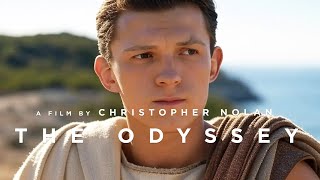

The Epic Collision: Why Bruckheimer and Weaver Are Redefining the ‘Odyssey Animation’
Is it time for animation to move beyond simple spectacle and delve into the profound complexity of classic literature? Hollywood producers Jerry Bruckheimer and Kevin Weaver are embarking on an ambitious project to adapt Homer’s timeless epic, ‘The Odyssey,’ into a feature-length animated film, signaling a potential seismic shift in how classical mythology is visually interpreted.
This isn’t just another retelling; it’s a calculated collision between high-octane action and deep mythological reflection, positioning the forthcoming ‘animated Odyssey’ as a benchmark for epic storytelling in the modern era. As we look toward April 25, 2026, the development of this project promises to redefine the limits of movie animation.
Table of Contents
- The Mythological Challenge: Balancing Epic and Emotion
- The Creative Synergy: Bruckheimer and Weaver’s Vision
- Revisiting Animation History Through Classical Texts
- The Hybrid Visual Approach: Blending CGI and Classical Art
- Setting a New Benchmark for Epic Animation
- What’s Next for the Animated Odyssey?
The Mythological Challenge: Balancing Epic and Emotion
Adapting ‘The Odyssey’ is inherently difficult. It requires more than just visual flair; it demands the ability to translate themes of endurance, homecoming, betrayal, and divine intervention into a cohesive, emotionally resonant visual narrative. The challenge for Bruckheimer and Weaver is not merely to create a visually stunning spectacle, but to capture the melancholic depth of Odysseus’s journey while maintaining the high-stakes adventure audiences expect from a Bruckheimer production.
The core difficulty lies in balancing the epic scope of Greek mythology—which often favors slower, reflective pacing—with the kinetic energy required for a modern animated feature. The animation team is currently navigating this tightrope, aiming to ensure that the visual momentum serves the emotional arc, rather than overwhelming it. This effort to blend historical depth with contemporary visual storytelling sets the stage for a genuinely unique cinematic experience.
The Creative Synergy: Bruckheimer and Weaver’s Vision
The partnership between Jerry Bruckheimer and Kevin Weaver brings a fascinating, almost contradictory, dynamic to this project. Bruckheimer is globally synonymous with high-octane action, explosive set pieces, and large-scale commercial filmmaking. His involvement suggests a commitment to cinematic scale and visceral energy. Conversely, Weaver is renowned for his deep understanding of historical and mythological adaptations, lending immediate credibility and thematic integrity to the project’s foundation.
This synergy is the project’s greatest asset. Bruckheimer brings the commercial drive and the demand for cinematic spectacle, while Weaver ensures the narrative remains anchored in the authentic emotional weight of the source material. This collaboration is designed to push the boundaries of what an ‘epic quest animation’ can achieve, merging the visceral excitement of action cinema with the narrative sophistication of classic literature. The resulting ‘Bruckheimer animation’ is poised to be both thrilling and profoundly moving.
Revisiting Animation History Through Classical Texts
The adaptation of classic literature into animation is not new, yet the execution of ‘The Odyssey’ in a feature format promises a significant evolution. Historically, adaptations often struggled with pacing or reducing complex character relationships into digestible animated sequences. This new project aims to address those historical hurdles by utilizing cutting-edge techniques to explore the psychological landscape of Odysseus. It represents a move away from simply illustrating a story toward fully embodying the philosophical weight of the epic.
By tackling this adaptation, the creators are engaging with the long history of ‘movie animation’ while simultaneously pushing the evolution of visual storytelling. It challenges the notion that animation must be purely whimsical; instead, it asserts that it can be a vehicle for serious, profound, and historically rich storytelling. This approach elevates the conversation surrounding ‘animation history’ by proving its capacity for handling high literary complexity.
The Hybrid Visual Approach: Blending CGI and Classical Art
The visual direction for the ‘animated Odyssey’ is expected to be a masterful hybrid of traditional artistry and modern technology. Rumors suggest the team is exploring a unique aesthetic that draws inspiration from classical Greek mythology—perhaps utilizing hand-drawn techniques for character nuance and mood, seamlessly integrated with cutting-edge 3D rendering for expansive seascapes and epic battles.
This blending of mediums is crucial. The traditional elements will provide the necessary emotional texture and historical authenticity, allowing the audience to connect with the characters’ internal struggles. The modern CGI will provide the scale, dynamism, and visual spectacle necessary for a blockbuster feature. This approach ensures that the final product is not just a beautiful spectacle, but an emotionally layered experience where the visual poetry perfectly mirrors the literary depth of the source material.
Setting a New Benchmark for Epic Animation
If this project succeeds, it will establish a new benchmark for how epic narratives are translated into animated cinema. It signals that audiences are ready for animation that demands intellectual engagement alongside visual pleasure. The success of the ‘animated Odyssey’ could open the door for other classic literary adaptations, demonstrating that there is a massive, untapped market for high-quality, visually ambitious mythological storytelling.
The financial commitment from both Bruckheimer and Weaver underscores the belief that this adaptation is more than just a nostalgic venture; it is a strategic move into the premium animated market. This initiative will likely influence subsequent adaptations, pushing studios to invest in projects that prioritize deep character development and sophisticated world-building, rather than relying solely on surface-level action. It is a testament to the enduring power of classical literature and the evolving potential of modern animation.
What’s Next for the Animated Odyssey?
The project is currently deep in the pre-production phase, focusing intensely on script adaptation and visual concept design. Industry analysts predict that the next phase will focus heavily on establishing the unique visual language—determining the precise mix between classical rendering and modern CGI—and securing a cast that can embody the complex roles of the Greek heroes. We anticipate that the final concept art and initial storyboards will be unveiled later this year, setting the stage for major promotional campaigns.
With development kicking off in late 2025, the team is working diligently to ensure that the final product honors the gravity of the source material while delivering the spectacle audiences crave. The expectation is that the ‘animated Odyssey’ will not only be a critical success but will also redefine the scope and emotional range of what epic animation can achieve.
Stay tuned to Variety and The Hollywood Reporter as we track the development of this monumental project.