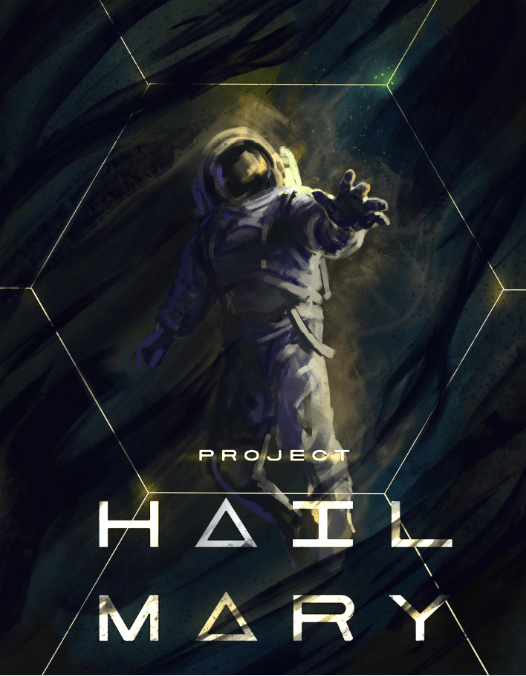

Earth’s Final Teacher: The Lethal Consequences if Ryland Grace Never Left Earth in ‘Project Hail Mary’
As we stand in the landscape of 2026 cinema, few films have captured the collective imagination quite like the theatrical adaptation of Project Hail Mary. The cinematic translation of Ryland Grace—the reluctant scientist-turned-savior—has sparked a renaissance in hard sci-fi storytelling. However, the most haunting question among cinephiles and narrative theorists isn’t about the physics of the Astrophage, but rather a pivot in character choice: What if Ryland Grace had successfully refused his seat on the Hail Mary? What if he had remained on an Earth that was slowly losing its light?
Table of Contents
- The Divergence: The Choice That Wasn’t
- The Stratt Factor: The Cold Calculus of Survival
- The Science Gap: Why No One Else Could Do It
- The Visual Decay: A Cinematic Portrayal of Earth’s End
- Character Arc Subversion: From Reluctant Hero to Helpless Witness
{{IMAGE_1}}
The Divergence: The Choice That Wasn’t
In the theatrical cut, the tension between Eva Stratt and Ryland Grace serves as the narrative’s emotional backbone. The divergence point is clear: the moment Stratt realizes that Ryland’s cowardice outweighs his curiosity. In our theatrical reality, she forces him onto the ship, a decision that defines the film’s second act. But if we analyze the ‘What If’ scenario where Grace remains in his junior high classroom, the film transforms from a space-bound odyssey into a grounded tragedy of extinction.
Without Grace, the Hail Mary mission would have proceeded with the backup crew—highly trained, yes, but lacking the specific, lateral-thinking brilliance that Grace displayed during the initial Astrophage discovery. The cinematic stakes would shift from ‘how do we save the world’ to ‘how do we spend our final decade.’ The film’s pacing would slow, trading the high-octane physics of Tau Ceti for the somber, industrial desperation of a planet entering a permanent winter.
The Stratt Factor: The Cold Calculus of Survival
The character of Eva Stratt, played with a chilling, pragmatic intensity in the film, becomes a much darker figure in this alternate timeline. Without the moral anchor of Ryland Grace’s survival, Stratt’s character would have likely leaned further into authoritarian control to maintain order as the sun dimmed. The theatrical universe has already established her as a woman willing to break any law to save the species. If Grace stays, Stratt is forced to watch her greatest gamble fail in real-time.
The cinematic weight of her failure would provide a fascinating contrast to the triumph we see on screen. We would see a version of Stratt who has to manage the collapse of the global food chain, the freezing of the oceans, and the eventual realization that her ‘Hail Mary’ was a shot in the dark that missed its mark. The relationship between her and Grace, usually one of mutual respect born of necessity, would rot into one of mutual resentment.
{{IMAGE_2}}
The Science Gap: Why No One Else Could Do It
The core of Project Hail Mary is the ‘Grace-Rocky’ dynamic, a cornerstone of modern sci-fi cinema. If Grace never leaves Earth, Rocky—the Eridian engineer—is left to die alone in the Tau Ceti system. This is the most devastating consequence of the divergence. The science required to understand Astrophage wasn’t just about raw IQ; it was about Grace’s unique background as a molecular biologist who chose to teach children. His ability to explain complex concepts in simple terms was his superpower.
The backup scientists on the Hail Mary were specialists, deep-dive experts who lacked Grace’s generalist flexibility. In the theatrical universe, we see Grace solve problems through trial, error, and intuition. A specialized crew would have likely followed protocol into a dead end. Without Grace’s ‘outside-the-box’ thinking, the Eridian-Human alliance never forms, and both civilizations vanish in silence. The film would transition from a story of communication to a story of isolation.
The Visual Decay: A Cinematic Portrayal of Earth’s End
From a directorial perspective, the ‘Grace on Earth’ scenario would offer a starkly different visual palette. Instead of the sterile, high-contrast lighting of the ship, we would be treated to the ‘Global Dimming’ aesthetic. Cinematographers would likely employ desaturated blues and greys to represent the cooling atmosphere. We would see iconic Hollywood landmarks—the Griffith Observatory, the New York skyline—shrouded in the permanent twilight of a dying sun.
The visual storytelling would focus on the ‘slow apocalypse.’ Unlike the explosive destruction of typical disaster movies, this would be a quiet, cold, and meticulously detailed descent into darkness. The contrast between the flickering lights of a classroom and the encroaching snow outside the window would serve as a powerful metaphor for the extinction of human knowledge and hope. {{IMAGE_3}}
Character Arc Subversion: From Reluctant Hero to Helpless Witness
Ryland Grace’s arc in the theatrical cut is one of redemption—a man who finds his courage millions of miles from home. If he stays on Earth, that arc is subverted into a study of regret. Ryan Gosling’s portrayal of Grace would shift from the energetic, amnesiac scientist to a man haunted by the knowledge that he could have been ‘there.’ The guilt of survival in a world that is dying would be a heavy thematic burden.
Instead of the triumphant return of the ‘beetles’ with the solution, the film would end with Grace looking at the stars, knowing that somewhere out there, a ship he was supposed to be on is a tomb. It’s a sobering thought that highlights why the theatrical version we received is so vital. It reminds us that while the ‘What If’ is a fascinating intellectual exercise, the heart of the story lies in the terrifying leap of faith that Grace eventually takes. The survival probability of Earth without Ryland Grace on that ship? Mathematically, it’s zero. Narratively, it’s the greatest tragedy Hollywood never told.
{{IMAGE_4}}