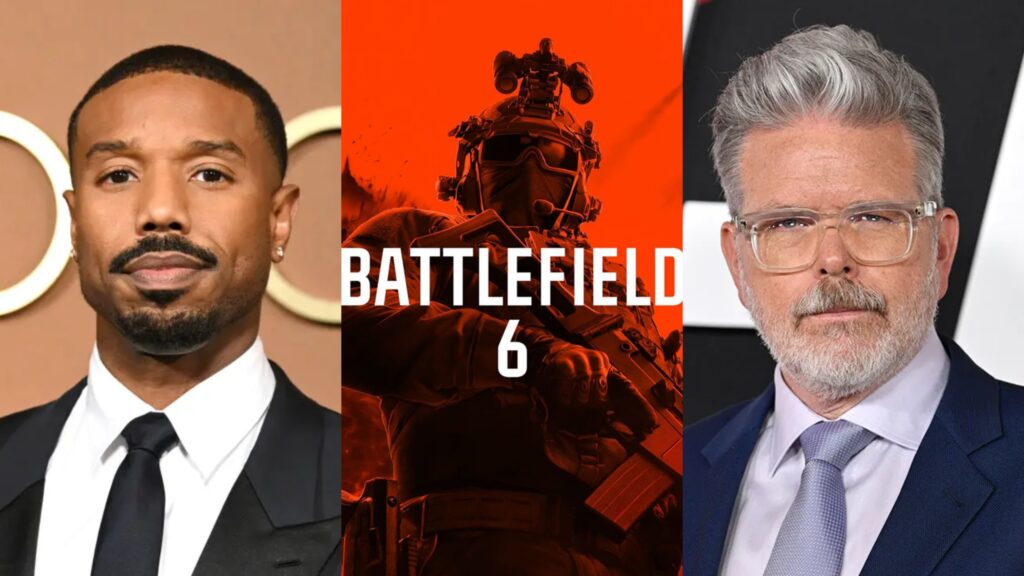

The Adaptation Battle: McQuarrie and Jordan’s Master Plan for the Epic Battlefield Film
Whispers from the set are revealing that the next cinematic evolution of the Battlefield universe is poised to be less about historical accuracy and more about pure, unadulterated kinetic energy. Director Christopher McQuarrie and actor Michael B. Jordan have officially joined forces to spearhead the highly anticipated Battlefield video game movie adaptation, signaling a radical departure from traditional war film aesthetics.
This unprecedented collaboration promises an epic war film that translates the scale and visceral intensity of the Battlefield gameplay directly onto the big screen, setting the stage for what could be one of the most dynamic action spectacles Hollywood has seen in years. As we approach April 25, 2026, the strategy being developed by McQuarrie and Jordan is not just about retelling a story; it’s about redefining the cinematic experience of large-scale warfare.
Table of Contents
- The McQuarrie Blueprint: Redefining War Cinema
- Michael B. Jordan: Bringing Visceral Action to the Screen
- Translating Gameplay: The Scale of the Battlefield Universe
- Moving Beyond Realism: A New Aesthetic for War Films
- The Strategic Pivot: Why This Adaptation Will Succeed
The McQuarrie Blueprint: Redefining War Cinema
Christopher McQuarrie’s reputation for crafting high-octane, visually stunning action sequences is about to be unleashed on the vast, chaotic landscape of the Battlefield franchise. His involvement signals an intent to treat the sprawling world of Battlefield not as a historical backdrop, but as a dynamic, living environment where action dictates the narrative pace. Industry insiders suggest that McQuarrie is aiming to harness the kinetic energy inherent in the video game mechanics, translating the real-time chaos of Battlefield into a meticulously choreographed cinematic experience.
The expectation is that the resulting film will prioritize momentum and spectacle over slow, drawn-out historical realism. This approach aligns perfectly with McQuarrie’s signature style, which favors visceral intensity and tightly edited sequences. By employing this directorial lens, the adaptation is set to distinguish itself sharply from conventional war movie adaptations, offering audiences an experience that feels immediate, explosive, and utterly relentless. This is more than just a war film adaptation; it is a commitment to cinematic action.
Michael B. Jordan: Bringing Visceral Action to the Screen
To anchor this vision, Michael B. Jordan’s casting is arguably the most compelling strategic move in the entire project. Jordan is not simply being cast as a lead; he is brought in to embody the raw, intense physical presence that defines the core of the Battlefield experience. His history of portraying characters defined by intense physical capability and relentless drive perfectly mirrors the high-stakes environment of the Battlefield universe.
Jordan’s presence promises a visceral narrative that grounds the epic scale of the war film in palpable human intensity. The goal is to move beyond the traditional portrayal of soldiers as stoic historical figures and instead focus on the raw, adrenaline-fueled decisions and physical endurance required to survive in a battlefield scenario. This approach promises an action-packed narrative where every confrontation is a test of physical and mental fortitude. Fans will be anticipating Jordan delivering a performance that is as explosive as the explosions on screen, pushing the boundaries of what an epic war film can achieve.
Translating Gameplay: The Scale of the Battlefield Universe
One of the most complex challenges facing the production team is effectively translating the sheer scale and chaotic scope of the Battlefield video game franchise onto a cinematic canvas. Battlefield games are defined by massive maps, dynamic player interactions, and overwhelming scale—elements that are notoriously difficult to render convincingly in a film format. The adaptation strategy must find a way to visualize these sprawling conflicts without sacrificing narrative clarity.
The adaptation plans, as discussed internally, focus heavily on utilizing cinematic techniques to convey the scale, rather than relying on exhaustive historical set pieces. Instead of focusing on static battles, the film is set to leverage dynamic camera work, sweeping drone shots, and immersive sound design to make the viewer feel simultaneously small and overwhelmed by the scale of the conflict. This focus on scope ensures that the film remains an epic war film, emphasizing the overwhelming nature of the Battlefield setting rather than getting bogged down in minutiae.
Image 3: A sweeping, cinematic shot visualizing the massive scale of the Battlefield conflict.
Moving Beyond Realism: A New Aesthetic for War Films
The decision to steer clear of strict historical realism is central to the success of this adaptation. Traditional war films often struggle to balance historical accuracy with the demand for cinematic spectacle. By opting for a style heavily influenced by action cinema, McQuarrie and Jordan are creating a new aesthetic for the Battlefield movie—one defined by high-octane choreography, exaggerated tension, and hyper-stylized visuals. This approach allows the adaptation to focus on the emotional and kinetic impact of the conflict, rather than purely historical documentation.
This shift positions the film to appeal to a broader audience accustomed to the high-energy, visually rich storytelling found in modern blockbuster cinema. It allows the film to explore the themes of conflict, camaraderie, and survival through a lens of dynamic action, making the Battlefield movie adaptation a potent example of how video game intellectual property can evolve into a fresh, high-energy cinematic experience. It’s an epic war film that prioritizes adrenaline and visual storytelling above all else.
The Strategic Pivot: Why This Adaptation Will Succeed
The success of the Battlefield film adaptation hinges on this strategic pivot: embracing the video game’s inherent dynamism rather than attempting a static, historical interpretation. The partnership between Christopher McQuarrie’s directorial flair and Michael B. Jordan’s physical intensity creates a powerful synergy that promises a film unlike any other in the war genre. The adaptation isn’t just a movie; it’s a promise of cinematic chaos, driven by a director who understands spectacle and an actor who embodies pure, visceral force.
As the industry looks for fresh, high-energy adaptations of popular IP, this project offers a compelling solution. It taps into the appetite for explosive action while delivering a unique visual language that respects the source material’s intensity while pushing cinematic boundaries. We anticipate that this approach will successfully bridge the gap between massive gaming popularity and mainstream cinematic achievement, positioning the Battlefield movie as the definitive epic war film of the modern era.
What’s Next
With the partnership officially announced and the creative vision solidified, the production is now moving into the intense pre-production phase. Fans can expect more detailed reveals about the script, casting choices, and the visual roadmap as we move closer to the official announcement of release dates. The anticipation for this high-octane Battlefield movie is only set to increase as we look ahead to the upcoming cinematic spectacle.