
The Pink Paradox: Why the ‘Barbie’ Cinematic Adventure is a Masterclass in Superficiality
Is the staggering global success of the ‘Barbie’ movie merely a triumph of spectacle, or has it inadvertently exposed the shallow depths of modern blockbuster filmmaking? As we sit here on April 25, 2026, the critical conversation surrounding the film has shifted from celebration to dissection, forcing us to analyze whether its unprecedented cultural footprint outweighs its narrative substance. This is not just a review; it is a deep dive into the superficiality of a phenomenon that redefined box office economics while sparking a global debate on gender and aesthetics.
The ‘Barbie’ film has achieved an almost mythical status, breaking records and igniting a firestorm of fan theories and critical analysis. Now, as we assess its legacy, we must ask: Did the film successfully transcend its surface-level appeal, or is its success a cautionary tale about prioritizing aesthetic over thematic depth in the age of intellectual property?
Table of Contents
- The Spectacle Versus the Substance: Deconstructing the Narrative
- Cultural Impact and the IP Economy: A Case Study in Blockbuster Success
- Fashion, Fantasy, and Superficiality: Analyzing the Barbie Aesthetic
- The Cinematic Critique: Greta Gerwig’s Vision and its Execution
- The Legacy and What’s Next: Redefining Blockbuster Economics
The Spectacle Versus the Substance: Deconstructing the Narrative
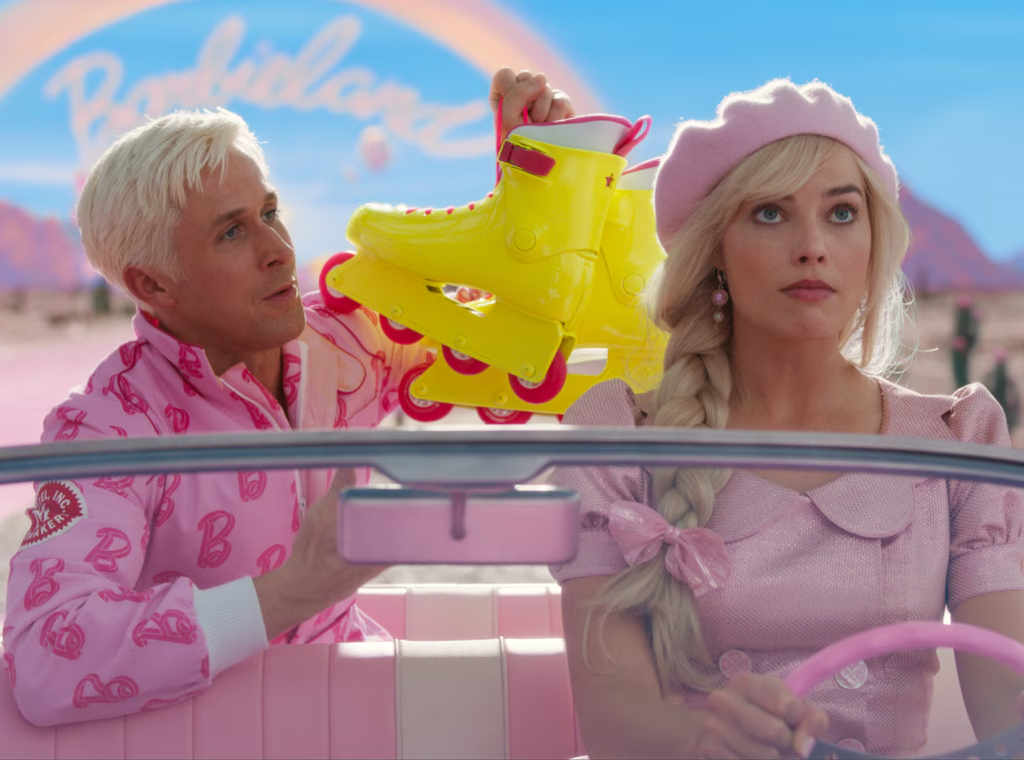
The immediate appeal of the ‘Barbie’ movie lies undeniably in its visual saturation and its unapologetic embrace of hyper-feminine fantasy. It is a feast for the eyes, a world rendered in blinding pink, which, while visually stunning, often serves as a distraction from the deeper thematic inquiries the film attempts to pose. The narrative, while engaging on an emotional level, ultimately operates on a surface plane. The core conflict, while framed by existential angst and societal critique, remains fundamentally a highly stylized exploration of gender roles and consumerism. Critics are now dissecting whether this surface-level engagement is enough to justify the massive cultural weight the film carries.
The film’s success forces us to confront the tension between spectacle and substance. It demonstrated that an intensely visual, emotionally resonant narrative can achieve stratospheric success, but it simultaneously raises the question of whether this success is earned through profound storytelling or simply through potent branding. The film functions brilliantly as a cultural artifact, yet its cinematic critique remains somewhat muted when compared to the sheer force of its commercial victory.
Cultural Impact and the IP Economy: A Case Study in Blockbuster Success
The ‘Barbie’ phenomenon is more than just a successful film; it is a paradigm shift in intellectual property management and blockbuster economics. The merchandising success has reportedly surpassed the theatrical gross, redefining the very metrics by which we measure cinematic achievement in 2026. This unprecedented revenue stream has forced studios to re-evaluate the relationship between intellectual property and narrative quality. It has become a textbook example of how superficial themes, amplified by relentless marketing and merchandising, can achieve global reach that transcends traditional cinematic metrics.
This massive financial performance is now being analyzed as a case study for how superficial themes can achieve unprecedented global reach. The film’s impact on the industry is profound, leading to new industry guidelines for family-friendly narratives and sparking a global debate on gender representation. The sheer volume of fan theories and fan-created content underscores the film’s ability to generate sustained, passionate engagement far beyond the initial viewing experience. The way the public embraced the aesthetic and the commentary demonstrates a hunger for stories that reflect contemporary societal anxieties, even if the delivery remains highly stylized.
Fashion, Fantasy, and Superficiality: Analyzing the Barbie Aesthetic
A significant portion of the film’s critical discussion revolves around its aesthetic choices—the highly saturated colors, the meticulously designed fashion, and the pervasive ‘Barbiecore’ trend. This focus on fashion and visual design allows for a deeper analysis of superficiality. The film operates almost as a high-concept fashion show, where the visual spectacle is as important as the plot. The aesthetic choices, while undeniably striking, risk reducing complex social commentary into a glossy, easily digestible visual language.
The ‘Barbie’ persona itself is the ultimate symbol of superficiality—a flawless, constructed ideal. By exploring this constructed reality, the film implicitly critiques the societal pressures placed upon women to conform to an unattainable standard. However, the method of critique relies heavily on the visual appeal. The fashion analysis, while rich, ultimately serves to reinforce the very idealized, yet inherently superficial, nature of the Barbie world. It is a masterclass in selling an idealized fantasy, rather than offering a raw, uncomfortable truth.
The Cinematic Critique: Greta Gerwig’s Vision and its Execution
Greta Gerwig’s direction brought a unique, often whimsical, lens to the exploration of these themes. Her cinematic critique centers on the juxtaposition of playfulness and existential dread. The film manages to blend the playful escapism of a children’s story with profound commentary on adult anxieties regarding identity, consumerism, and societal expectations. The execution is masterful in its tone, yet some critics argue that the emphasis on aesthetic coherence occasionally overshadows the narrative’s potential for more rigorous thematic exploration.
The film’s handling of gender representation, while groundbreaking in its global context, also invites scrutiny regarding its narrative trajectory. The film uses the hyper-feminine setting as a vehicle for critique, but some analysts suggest that the thematic substance is occasionally filtered through the lens of visual appeal. The film functions brilliantly as a piece of art, but its narrative structure occasionally sacrifices the grit necessary for truly challenging cinematic discourse. This is where the true critical debate lies: is it a brilliant, yet ultimately superficial, piece of storytelling?
The Legacy and What’s Next: Redefining Blockbuster Economics
As we look toward the future, the ‘Barbie’ film’s legacy will undoubtedly be defined by its influence on the blockbuster model. It has proven that massive commercial success can be achieved through highly stylized, visually driven content, fundamentally shifting the focus of studios. The discussion surrounding its potential sequels is now inextricably linked to this critical reception. The development of future installments will undoubtedly be scrutinized not just for their entertainment value, but for their ability to deliver narrative depth commensurate with the IP’s immense cultural status.
The film has ushered in an era where the economics of cinema are increasingly tied to cultural resonance and brand power. Moving forward, the challenge for Hollywood will be to maintain this level of visual and cultural impact while simultaneously deepening the thematic material. The ‘Barbie’ movie review is not just an assessment of a single film, but a reflection of the shifting landscape of cinematic storytelling—a landscape where spectacle reigns supreme, but the demand for substance continues to grow.
The cinematic adventure of ‘Barbie’ has left an indelible mark, forcing us to recognize the powerful, yet complicated, relationship between art, commerce, and culture. It remains a vital touchstone for understanding the current state of Hollywood, proving that even the most superficial themes can ignite a global fire.