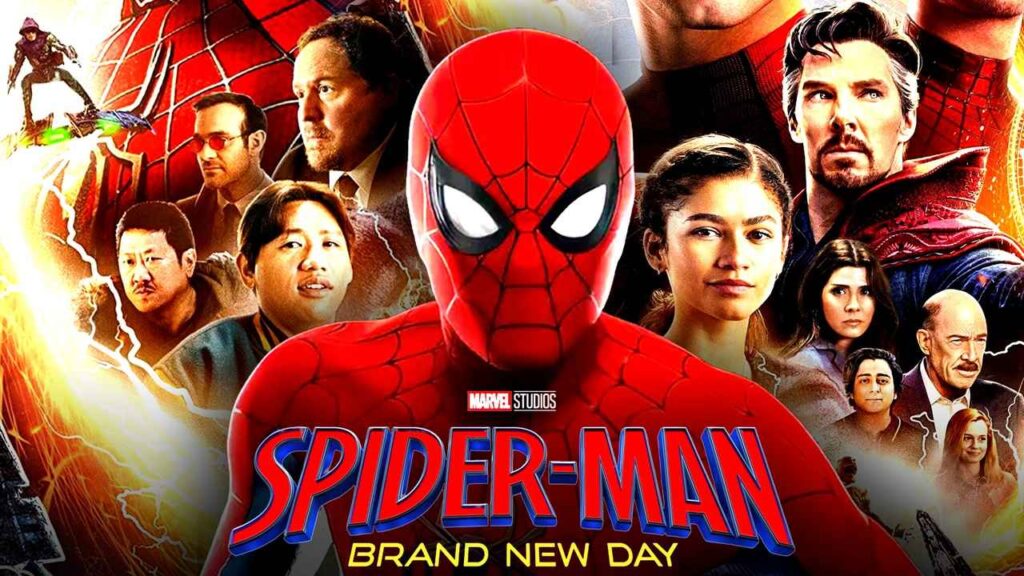

The Ghost in the Machine: Analyzing the Multiversal Fallout in ‘Spider-Man: Brand New Day’
As we navigate the cinematic landscape of 2026, few topics have ignited the fires of Hollywood discourse quite like the narrative architecture of Spider-Man: Brand New Day. The film, which serves as a spiritual and literal continuation of Peter Parker’s harrowing journey, hinges on a single, reality-shattering premise: What if the memory-wiping spell cast by Doctor Strange at the climax of No Way Home was physically incapable of crossing the multiversal threshold?
Table of Contents
- The Mechanics of the Divergence
- Peter Parker: The Isolated Hero vs. The Multiversal Legend
- The Variant Perspective: Why Tobey and Andrew Remember
- The Tethering Effect: A Narrative Deep Dive
- Consequences for the Sinister Six Survivors
{{IMAGE_1}}
The Mechanics of the Divergence
In the original 2021 timeline, the world—and the multiverse—forgot that Peter Parker existed. It was a sacrifice that redefined the character for a new generation. However, in Spider-Man: Brand New Day, the screenplay introduces a fascinating ‘What-If’ glitch. The theory posits that Strange’s spell, fueled by Earth-199999’s specific resonance, was localized. While the citizens of the MCU’s primary New York City see a stranger in a blue-and-red suit, the variants—Peter #2 and Peter #3—returned to their respective dimensions with their memories fully intact. This divergence creates a unique cinematic tension: Peter is forgotten in his own home, yet he remains a legend in two other universes.
This narrative choice shifts the genre of the film from a standard superhero flick to a high-concept psychological drama. It explores the existential dread of being ‘known’ by everyone except the people you love. If the memory wipe failed to affect the variants, it means the ‘Web of Life’ still holds a record of Peter Parker’s identity, creating a digital and spiritual footprint that cannot be erased by a single sorcerer’s incantation.
Peter Parker: The Isolated Hero vs. The Multiversal Legend
Tom Holland’s performance in Brand New Day is a masterclass in subtlety. We see a Peter who is scraping by, living in a cramped apartment, and operating as a ‘street-level’ hero without the backing of Stark Industries or the Avengers. He is the ultimate underdog. But the film contrasts this isolation with the knowledge that across the fabric of reality, he is a celebrated figure. This creates a fascinating character study: Is a hero’s identity defined by his local impact or his cosmic significance?
{{IMAGE_2}}
The ‘What-If’ scenario allows the film to explore Peter’s psyche in ways previous installments couldn’t. By having the variants remember him, the film provides a glimmer of hope—a ‘tether’ to his past. The audience is kept in a state of constant anticipation, wondering if and when these multiversal allies will attempt to reach back through the veil to find the young man who saved their lives and redeemed their villains.
The Variant Perspective: Why Tobey and Andrew Remember
From a character deep dive perspective, the implications for Tobey Maguire’s and Andrew Garfield’s Spider-Men are profound. In this scenario, they return to their worlds carrying the weight of the MCU Peter’s sacrifice. Maguire’s Peter, now a seasoned veteran, views the memory of Holland’s Peter as a cautionary tale about the cost of heroism. Garfield’s Peter, who found redemption in saving MJ, views the memory as a call to action.
This ‘Brand New Day’ narrative suggests that the variants didn’t just go back to their lives; they began looking for ways to bypass the spell. This turns the multiverse into a giant puzzle box. If they remember him, then the ‘truth’ exists somewhere in the universe. This provides a narrative engine that drives the plot forward without relying on traditional ‘villain-of-the-week’ tropes. The conflict is not just physical; it is an intellectual and emotional battle against the fabric of reality itself.
{{IMAGE_3}}
The Tethering Effect: A Narrative Deep Dive
The ‘Tethering Effect’ is a term coined by the film’s theorists to describe the lingering connection between the three Peters. Because the memory wipe was incomplete, the multiversal bond remains ‘active.’ This leads to the film’s most visually stunning sequences: ‘Echo Moments’ where Peter feels the presence of his variants during moments of extreme stress or peril. These aren’t just cameos; they are structural elements of the story that emphasize Peter’s lack of true solitude.
Analytically, this choice subverts the ‘hard reboot’ that many fans expected. Instead of a clean slate, Brand New Day offers a ‘haunted’ slate. The film utilizes high-contrast cinematography to highlight this, often bathing Peter in cold, blue tones when he is alone in NYC, and shifting to warmer, amber hues during his ‘Echo Moments.’ It is a visual representation of the warmth of being remembered versus the coldness of being forgotten.
Consequences for the Sinister Six Survivors
Perhaps the most intriguing consequence of this ‘What-If’ scenario is the fate of the ‘cured’ villains. If Green Goblin, Doctor Octopus, and Electro returned to their timelines with their sanity restored—and their memories of Peter Parker intact—how does that change their world? Brand New Day hints at a reformed world where these former antagonists are now the keepers of Peter’s secret. They are the unlikely guardians of his legacy in universes where he is not even the primary Spider-Man.
{{IMAGE_4}}
This creates a complex moral landscape. Peter Parker’s greatest enemies are now his only witnesses. The film leverages this irony to build a story about redemption and the enduring power of identity. As the third act approaches, the realization that the ‘forgetting’ was a failure becomes the catalyst for a new multiversal crisis, one that requires Peter to choose between his hard-won anonymity and the dangerous truth of his existence.
In conclusion, Spider-Man: Brand New Day isn’t just a sequel; it’s a sophisticated deconstruction of the ‘No Way Home’ finale. By asking ‘What if the spell failed?’, the film opens a door to a more mature, interconnected, and emotionally resonant Spider-Verse. It proves that in Hollywood, the only thing more powerful than a superhero is the memory of one.

![[Stranger Things] Fan Theory Series Part 1: The True Identity of Eleven’s Mother](https://mbwriterzzz.com/wp-content/uploads/2026/05/image-150x150.webp)