
How AI Is Changing Disease Detection
Artificial intelligence (AI) is changing how diseases are detected by helping healthcare professionals find health problems
earlier, faster, and more accurately. Instead of waiting for symptoms to become severe, AI helps identify
early warning signs by analyzing patterns in health data.
For patients, this often means earlier answers, clearer information, and more personalized care.
What Is AI in Healthcare?
In healthcare, artificial intelligence refers to computer systems that can learn from large amounts of data and recognize patterns.
These systems support medical teams by reviewing information more quickly and consistently than humans alone.
AI is commonly used to analyze:
- Medical images such as X-rays, CT scans, and MRIs
- Lab and blood test results
- Electronic health records
- Data from wearable devices
By processing this information efficiently, AI helps clinicians focus on areas that may need closer attention.
How AI Helps Detect Diseases Earlier
One of the biggest benefits of AI is early detection. AI systems can recognize small changes in health data that may appear
long before symptoms are noticeable.
- Identifying subtle changes in scans or lab results
- Detecting risk patterns before symptoms appear
- Monitoring health trends over time
Early detection often leads to earlier discussions, closer monitoring, and better health outcomes.
AI in Medical Imaging
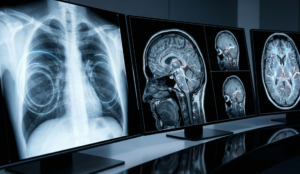
AI plays an important role in medical imaging, where it helps review X-rays, CT scans, MRIs, and mammograms.
AI tools can:
- Highlight areas in scans that may need closer review
- Reduce missed findings
- Speed up the diagnostic process
Doctors and radiologists always make the final decisions, with AI acting as a support tool—not a replacement.
Smarter Lab and Test Analysis
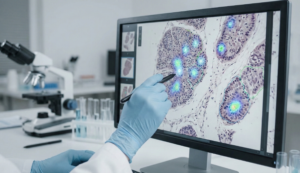
In laboratories, AI helps analyze test results and digital pathology slides with speed and consistency.
- Improving accuracy and reliability
- Reducing wait times for results
- Supporting high-volume or complex testing
For patients, this often means faster answers and fewer repeat tests.
Wearables and Everyday Health Monitoring

Many smartwatches and fitness trackers now use AI to help monitor health trends in everyday life.
- Heart rate and rhythm patterns
- Sleep and activity trends
- Recovery and stress indicators
When unusual patterns appear, these tools can encourage people to seek medical advice sooner.
Why AI Supports—Not Replaces—Doctors
Healthcare decisions require experience, empathy, and human judgment. AI helps clinicians by acting as a second set of eyes
and reducing repetitive tasks.
AI supports healthcare professionals by:
- Double-checking information
- Reducing administrative workload
- Allowing more time for patient care
The best outcomes happen when AI and healthcare professionals work together.
What This Means for Patients

AI is helping healthcare become more proactive, more personalized, and more supportive.
For patients, this means earlier insights, clearer explanations, and care that feels more responsive and informed.