Artificial intelligence is showing up everywhere in healthcare—and it’s doing some genuinely impressive things. It can scan medical images in seconds, spot patterns most of us would miss, and help clinicians manage overwhelming amounts of data.
So it’s no surprise people are asking:
Can AI really replace doctors—especially when it comes to diagnosing illness?
The honest answer? No.
But it can be an incredibly powerful partner.
Let’s talk about what that really means, without the hype or fear.
What AI Replacing Doctors Looks Like in Modern Diagnostics
AI shines when it’s working with large amounts of data, clear patterns, and repeatable tasks. In diagnostics, that gives it some very real advantages.
Can AI Replacing Doctors Lead to Earlier Disease Detection?
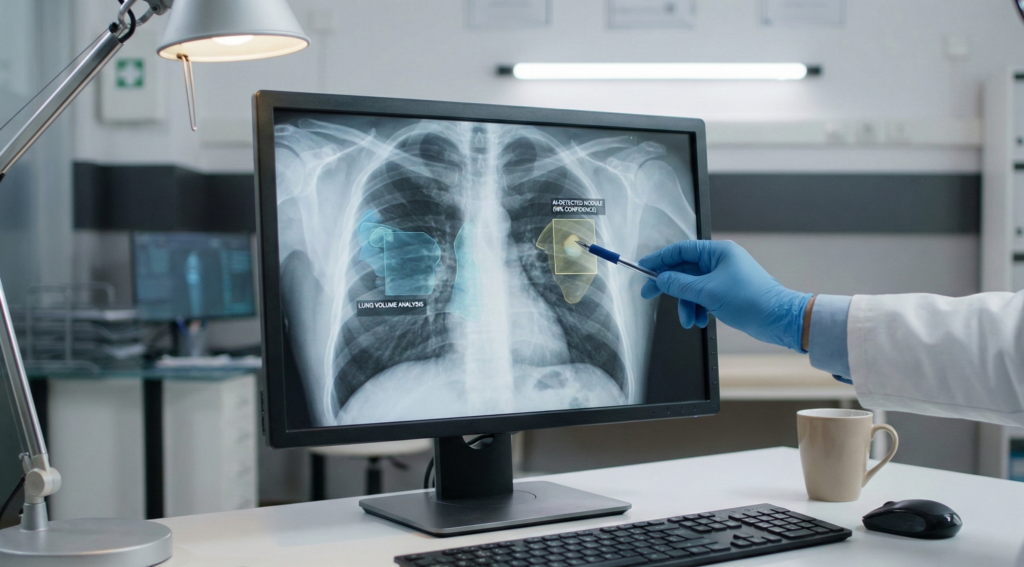
AI can analyze X-rays, MRIs, CT scans, and mammograms with remarkable consistency.
It can:
- Spot subtle abnormalities
- Flag areas that need closer attention
- Reduce errors caused by fatigue
- Act as a reliable second set of eyes for specialists
In very specific situations, AI can even match—or occasionally exceed—human accuracy. But that doesn’t mean it replaces the clinician reading the scan. It supports them.
Can AI Replacing Doctors Lead to Earlier Disease Detection?
By analyzing things like:
- Lab results
- Vital signs
- Medical histories
AI can help identify early warning signals and potential risks before symptoms become obvious.
That early insight can make a huge difference—but it still requires a doctor to interpret what it means for that specific person.
AI Replacing Doctors in Busy and Underserved Healthcare Settings

AI doesn’t get tired, overwhelmed, or distracted. That makes it especially helpful when healthcare systems are stretched thin.
It can:
- Review large volumes of cases quickly
- Help prioritize patients who need urgent care
- Support clinics with limited staff or resources
Think of it as extra capacity—not a replacement.
Why AI Replacing Doctors Is Still Not Realistic
For all its strengths, AI has very real limitations.
Why AI Replacing Doctors Cannot Fully Understand Patients
AI recognizes patterns.
Doctors understand people.
AI can’t:
- Sense fear, confusion, or pain
- Pick up on subtle emotional cues
- Weigh personal circumstances that don’t show up in data
Medicine is full of gray areas, and that’s where human judgment matters most.
Data Bias Issues in the Debate About AI Replacing Doctors
AI learns from existing data, and that data isn’t perfect.
Problems can include:
- Bias in training datasets
- Poor representation of certain populations
- Inaccurate results when data quality is low
Doctors are critical for questioning results, catching mistakes, and making sure patients aren’t harmed by blind reliance on algorithms.
Trust, Ethics, and Accountability in AI Replacing Doctors
When a diagnosis changes someone’s life, patients want answers from a person, not a system.
Questions like:
- Who takes responsibility?
- Who explains the risks and options?
- Who earns the patient’s trust?
These aren’t technical problems—they’re human ones.
The Future of AI Replacing Doctors: Collaboration, Not Replacement
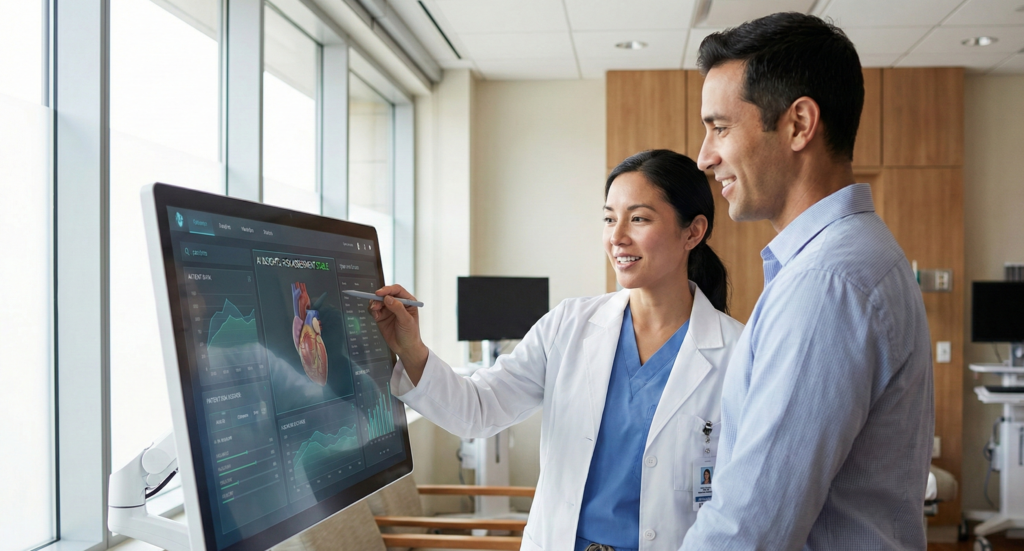
The most realistic future isn’t AI vs. doctors—it’s AI + doctors.
How Doctors Benefit Instead of Being Replaced by AI
- Faster access to insights
- Less time spent on repetitive tasks
- Better decision support
- More time for meaningful patient care
How Patients Benefit Even Without AI Replacing Doctors
- Earlier detection of issues
- More accurate diagnoses
- Shorter wait times
- Better access to care overall
In this model, AI is a tool, not the authority.
Will AI Replacing Doctors Ever Become Reality?

No—and it shouldn’t.
AI works best as:
- A diagnostic assistant
- A safety net
- A data-powered helper
Doctors bring what machines can’t:
- Empathy
- Ethical judgment
- Context and nuance
- Human connection
And healthcare simply doesn’t work without those.
Frequently Asked Questions